
Understanding Lemon Bay Fishing for Beginners
Success is broader than landing a large fish. Learning one reliable cast, recognizing habitat and understanding why the plan changes are meaningful wins.
Lemon Bay Fishing for Beginners belongs in the context of a shallow estuary, not an offshore charter. Lemon Bay fishing is influenced by tide movement, water temperature, wind, bait activity and the condition of seagrass and mangrove edges. A useful plan responds to those factors instead of promising one species, one spot or a fixed result.
How to plan around it
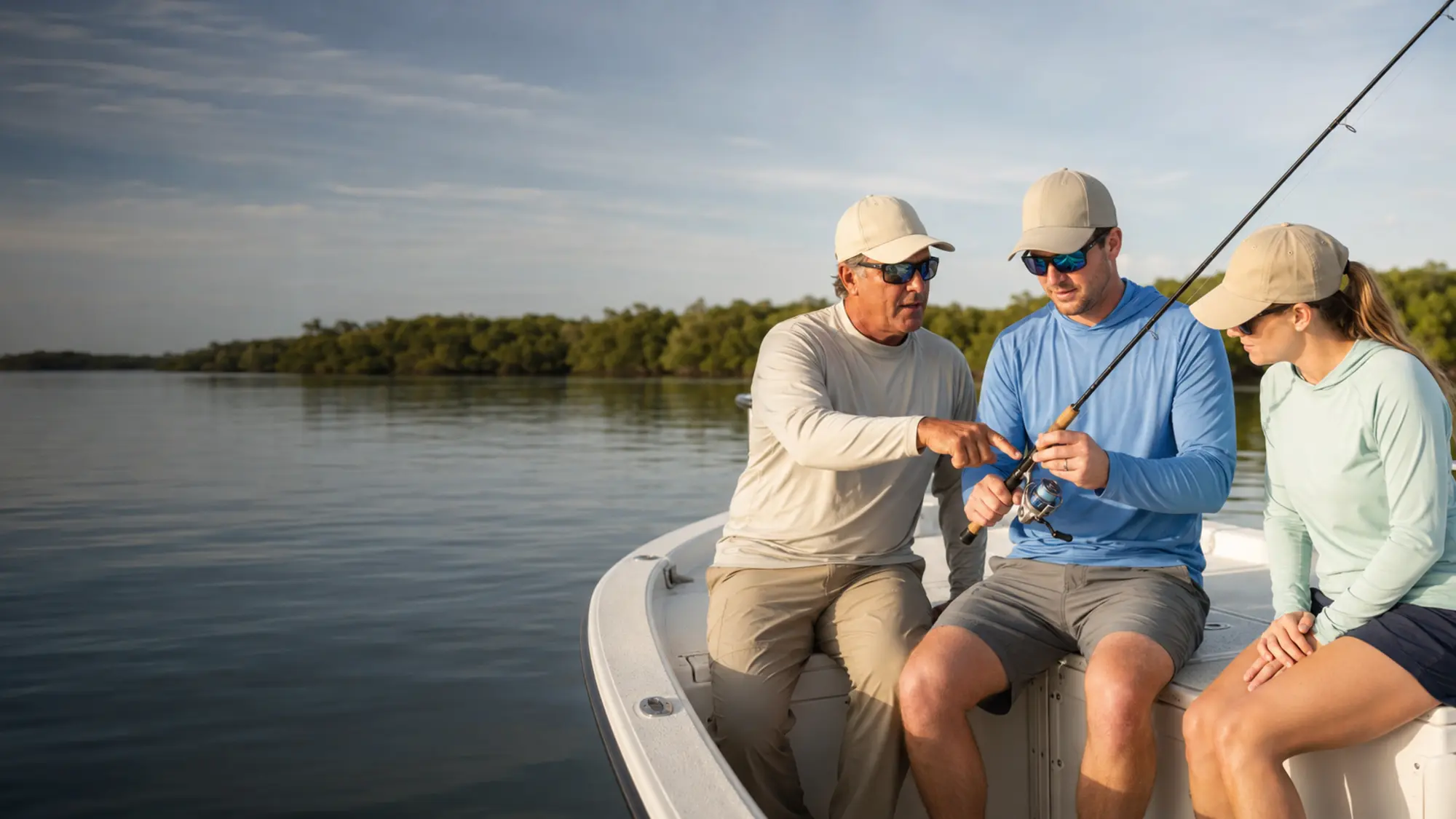
Tell the operator that you are new. Wear sun protection, listen during safety instructions and ask before touching hooks, fish or unfamiliar equipment.
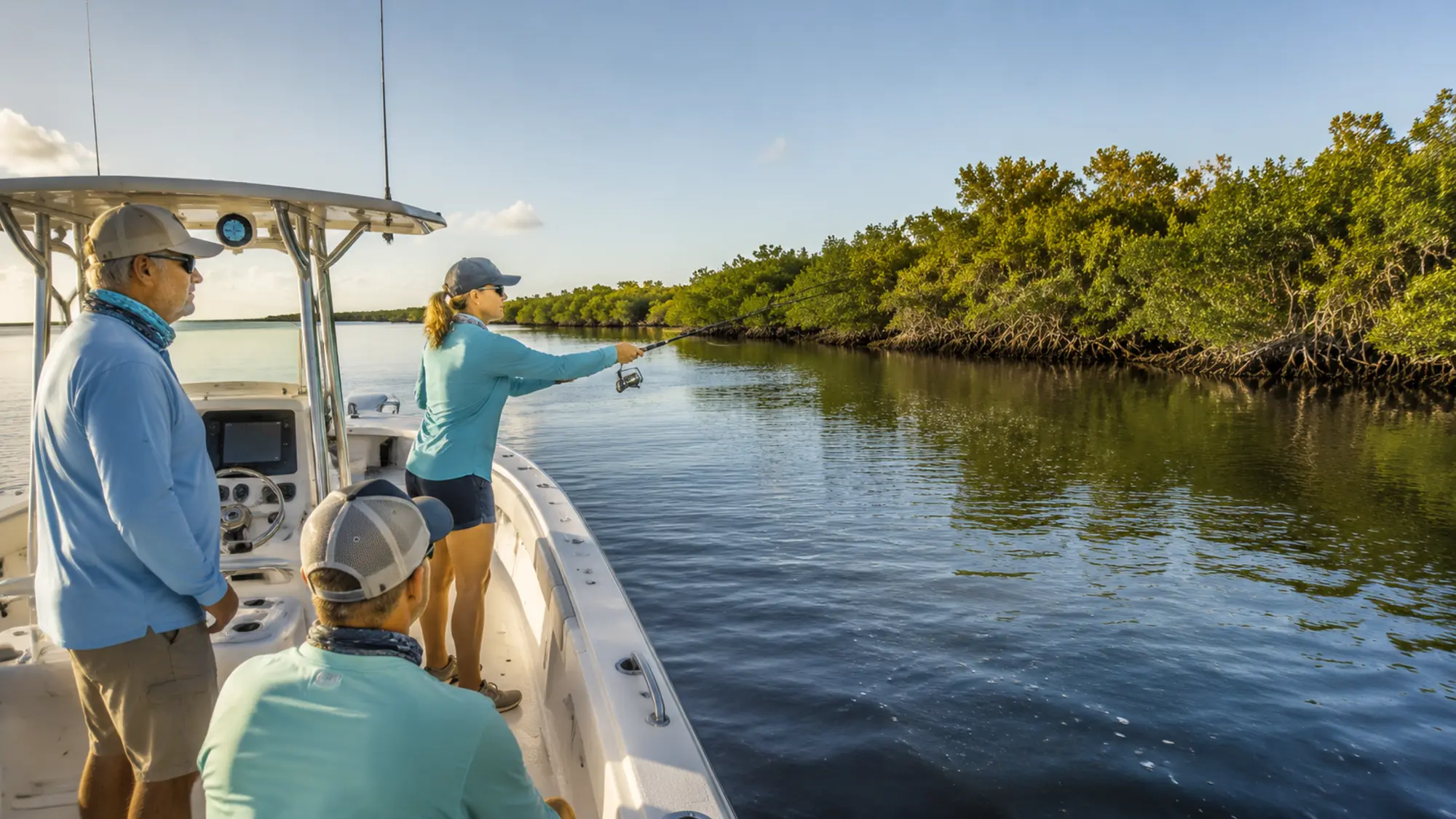
The most productive learning often happens between catches. Guests can watch how the captain positions the boat, changes a presentation or chooses a shoreline with moving water. Beginners should ask questions and focus on repeatable skills such as safe casting, line control and recognizing a bite rather than measuring the day only by the number of fish landed.
A respectful way to experience Lemon Bay
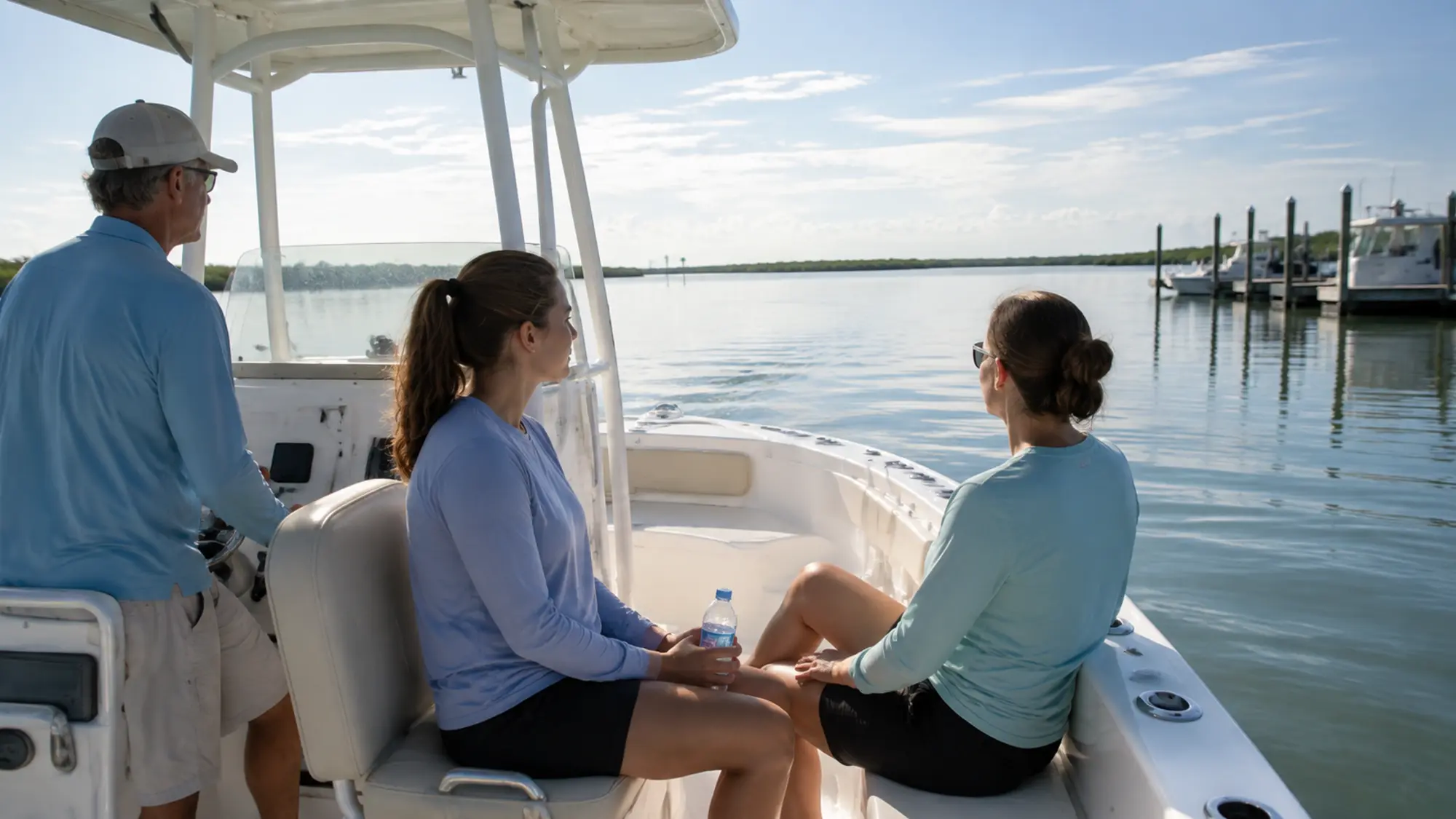
Lemon Bay is a shallow estuary shaped by seagrass, oyster habitat and mangrove shorelines. Good trips follow posted navigation and wildlife rules, keep a considerate distance from animals and leave the waterway as it was found.
Fishing rules and seasons can change, and identification matters before a fish is kept. The captain's current guidance controls on the boat. Handle any catch only when invited, keep tools and line organized, and release fish promptly when required or when conservation is the better choice.
- Follow posted slow-speed and no-wake zones
- Never feed or pursue wildlife
- Keep loose items and fishing line secured
- Choose reusable containers when practical
How to prepare for Lemon Bay Fishing for Beginners
Share each guest's experience level honestly. A first-time angler needs a different explanation than someone who fishes every week, and a family may benefit from shorter instruction, simple tackle and more breaks. Mention left-handed anglers, young children and anyone who is uncomfortable handling bait or fish.
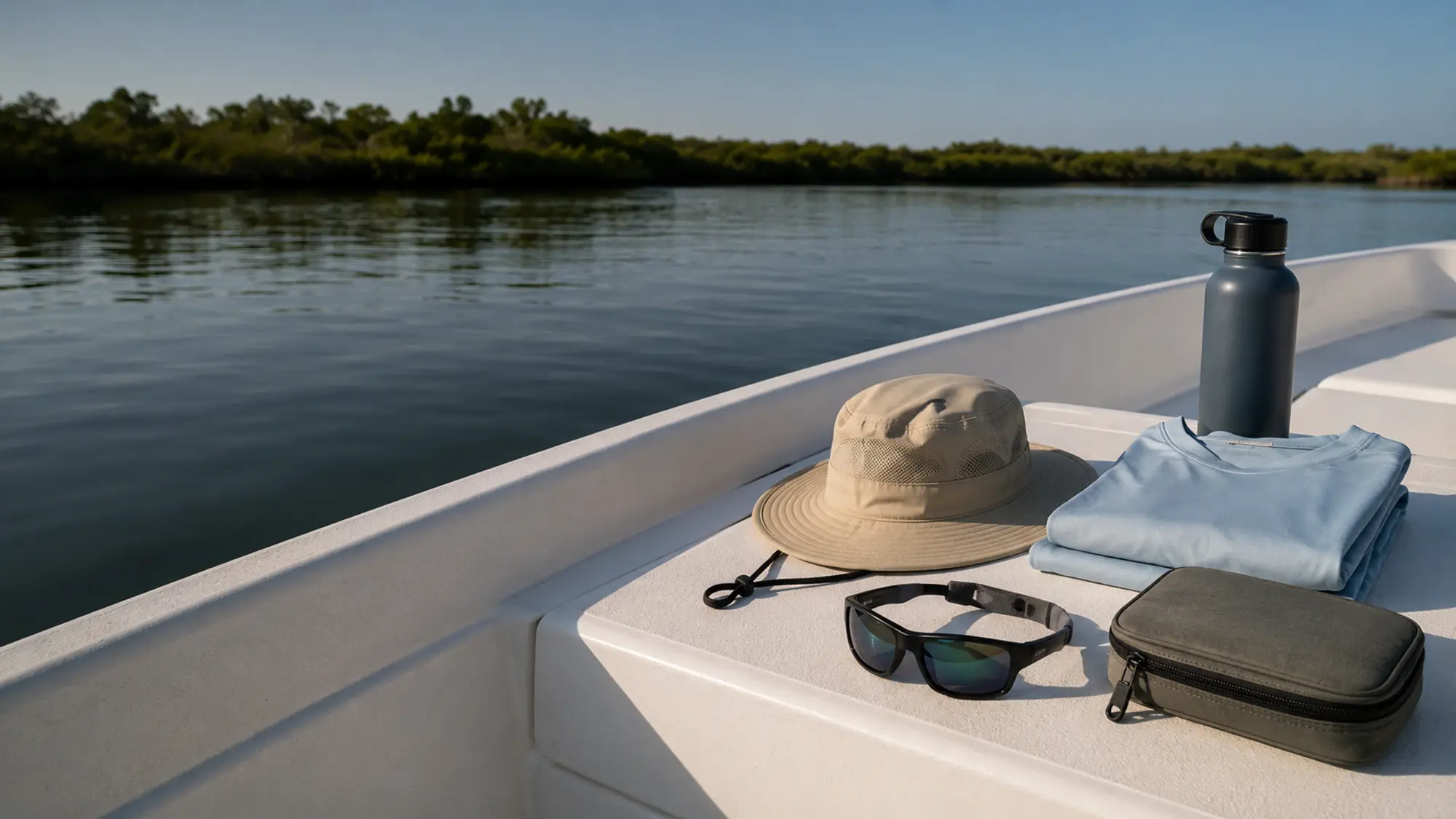
Sun protection and hydration are part of fishing performance. Lightweight coverage, polarized glasses with a retainer and a secure hat make it easier to watch the water and stay focused. Bring only approved gear so the deck remains clear.
- Experience level for every angler
- Children's ages and attention span
- Any sensitivity to bait or fish handling
- Questions about licenses, tackle and retained catch
Read conditions, not promises
A good inshore plan considers tide stage and wind together. Higher water may open access along flooded edges, while lower water can concentrate movement near channels and drains. Wind may determine which side of the bay offers the better balance of presentation and comfort. These are planning variables, not guarantees of a bite.
Ask what the captain recommends for the selected date, then stay flexible. A change in target, lure or area is often a sign that the trip is responding to real information rather than following a stale script.
- Check the trip-day weather message
- Follow the captain's casting zones
- Keep hooks controlled when the boat moves
- Treat every species and habitat with care
Questions, answered
Lemon Bay Fishing for Beginners FAQ
Specific reservation details are confirmed in writing before your trip.
Do I need to know how to cast?
No. Basic casting can be taught, and the approach can be adjusted to your comfort.
What if I am nervous about handling fish?
Say so. A guide can explain options and assist with safe handling.
Will I get seasick in the bay?
Protected water may reduce motion compared with offshore trips, but individual sensitivity and weather vary.
Is all equipment included?
Confirm current tackle, bait and other inclusions before booking.
Related boat experience
Turn this planning guide into time on the water.
Review Lemon Bay Fishing Tour for the relevant trip details, boat options, private-group rates and availability process.