
Understanding Manatees in Lemon Bay
FWC protection zones regulate vessel speed and operation in important areas. Operators must follow posted rules and avoid shallow habitat where both manatees and seagrass may be present.
How to plan around it
Polarized sunglasses reduce glare. If a manatee appears, stay calm and let the operator manage distance rather than calling for a closer approach.
A respectful way to experience Lemon Bay
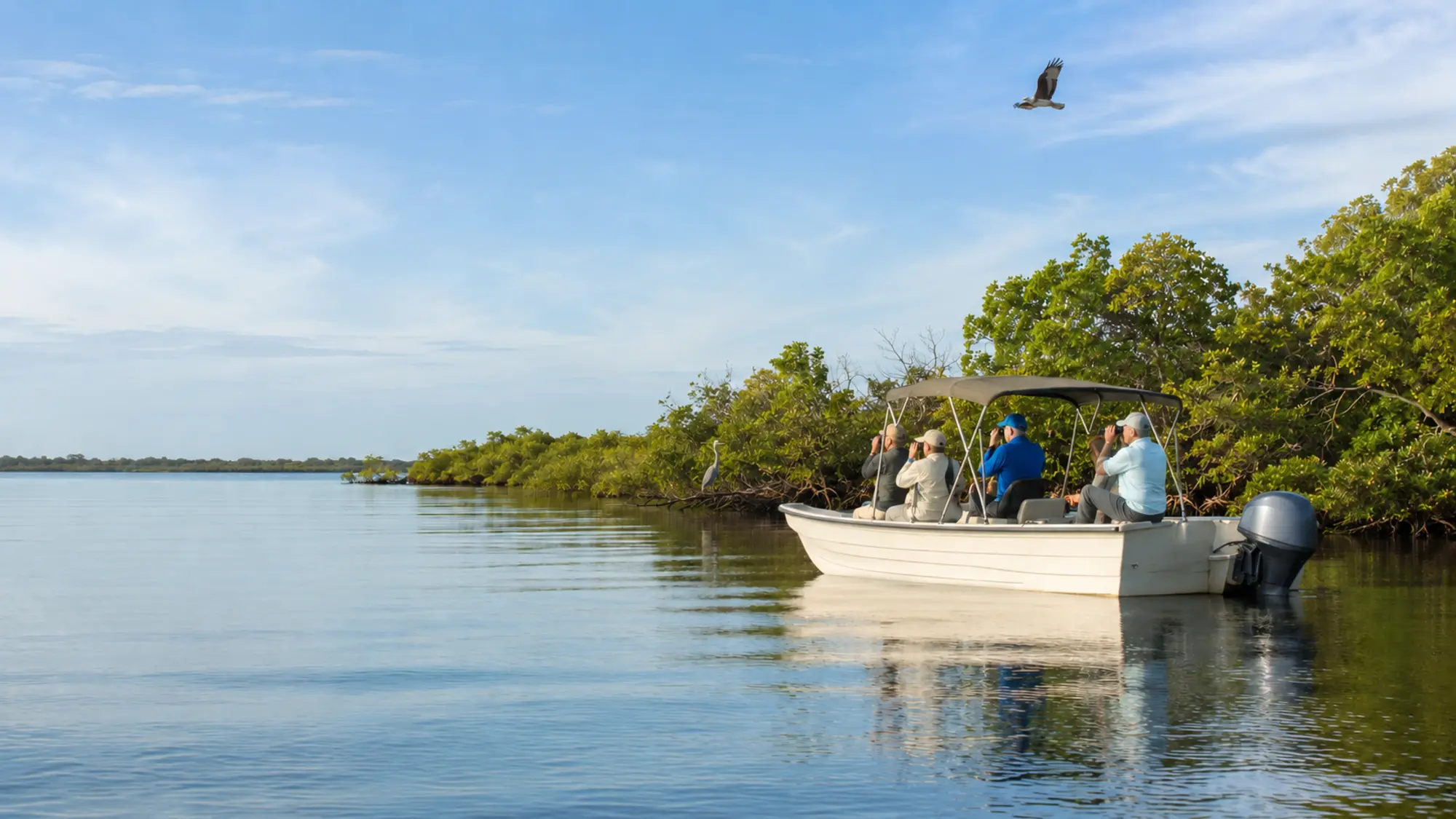
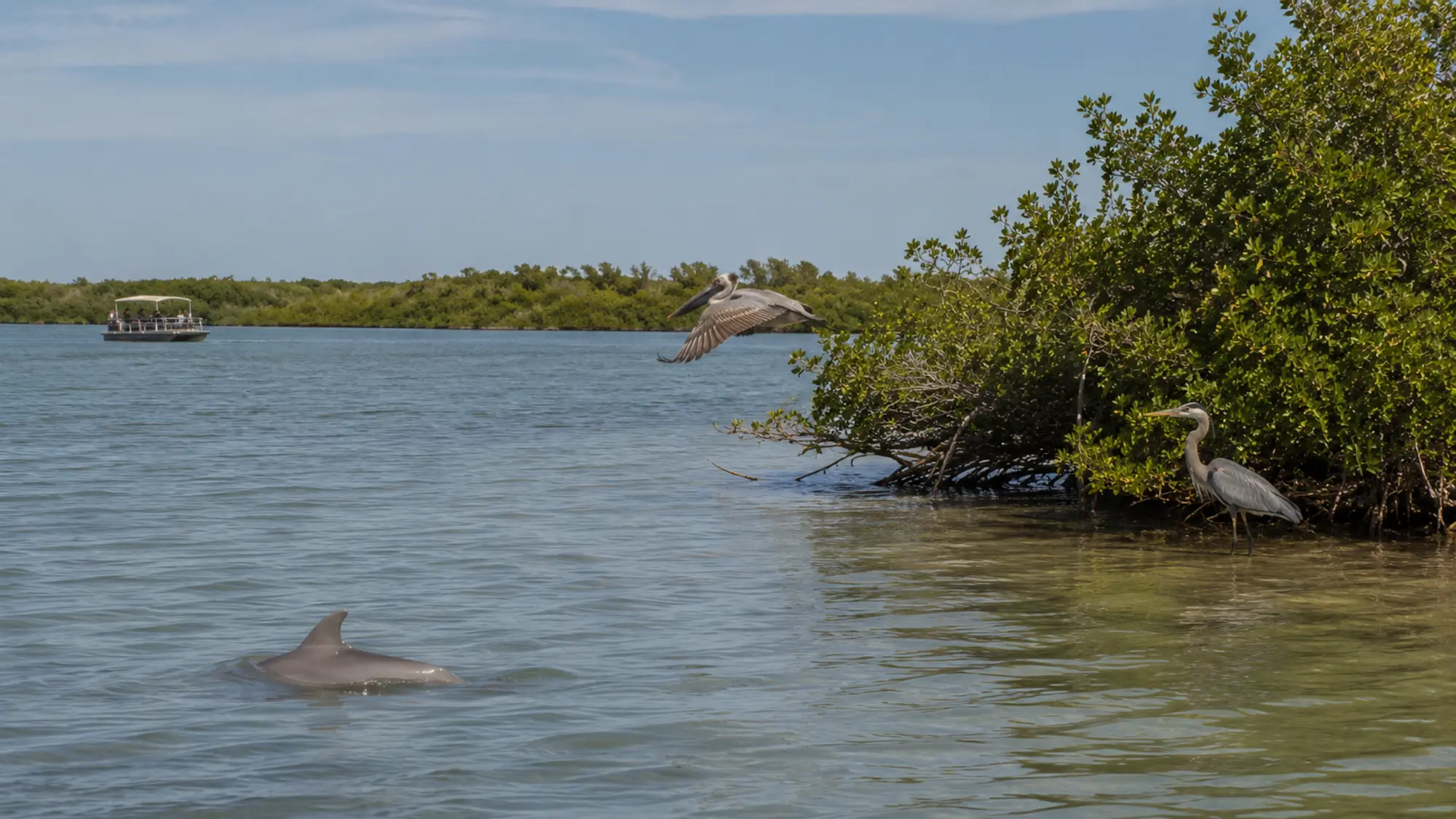
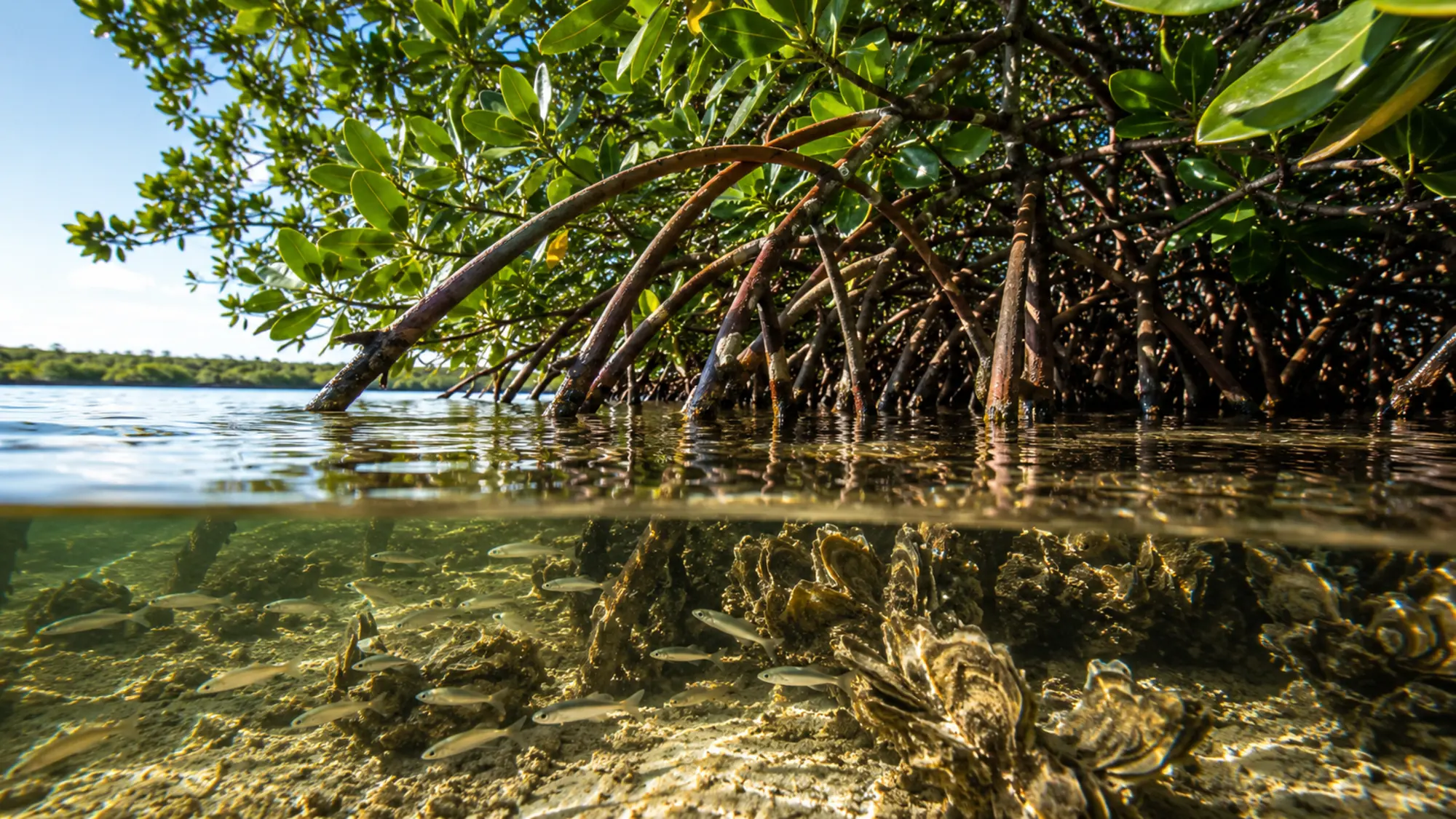
Lemon Bay is a shallow estuary shaped by seagrass, oyster habitat and mangrove shorelines. Good trips follow posted navigation and wildlife rules, keep a considerate distance from animals and leave the waterway as it was found.
- Follow posted slow-speed and no-wake zones
- Never feed or pursue wildlife
- Keep loose items and fishing line secured
- Choose reusable containers when practical
Signs often appear before the animal
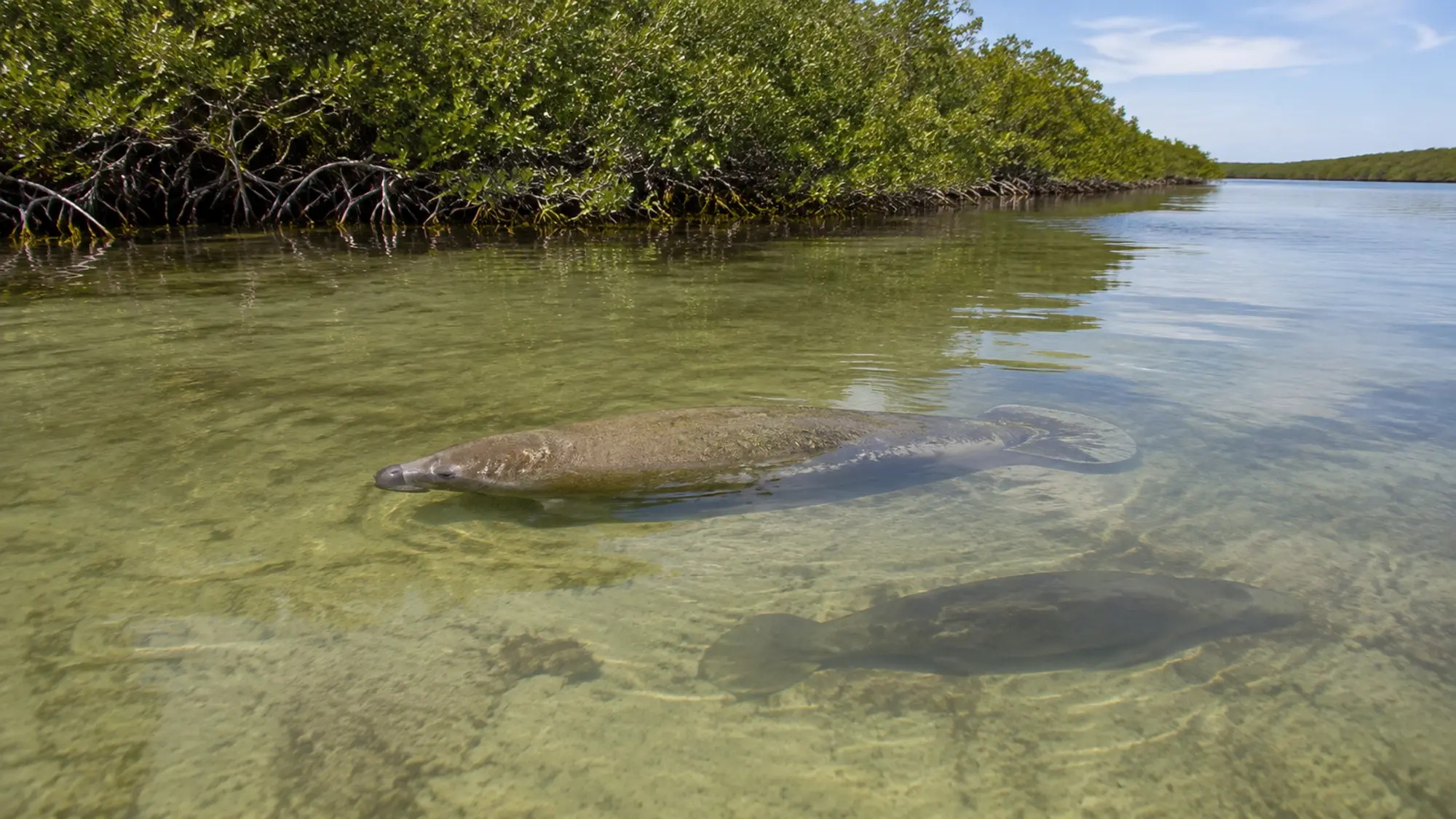
A manatee may first reveal itself through a rounded nose, a broad smooth back, a swirl or a quiet breath. Around the creek mouth and Lemon Bay, the captains have observed manatees at close range when the animals surfaced nearby on their own.
A boil or swirl is not automatic proof of a manatee. Mullet schools and other activity can disturb the surface, so patient observation is more accurate than naming every unexplained movement.
Close does not mean interactive
When a manatee is nearby, the vessel should remain predictable and comply with posted speed zones. Guests should not reach into the water, offer food or ask the captain to pursue it.
The responsible goal is to notice the animal without changing its behavior. No tour can guarantee a manatee sighting, even in water where the captains have seen them before.
Questions, answered
Manatees in Lemon Bay FAQ
Specific reservation details are confirmed in writing before your trip.
Are manatees always in Lemon Bay?
No. Their presence and location change, and sightings cannot be guaranteed.
Can the boat approach a manatee?
The boat should not harass or crowd wildlife. Posted zones and viewing rules apply.
Why are slow-speed zones important?
They reduce collision risk and protect manatees in areas they use.
What should I do if I see an injured manatee?
Report it to the FWC Wildlife Alert Hotline using current official guidance.
Related boat experience
Turn this planning guide into time on the water.
Review Dolphin and Wildlife Boat Tour for the relevant trip details, boat options, private-group rates and availability process.